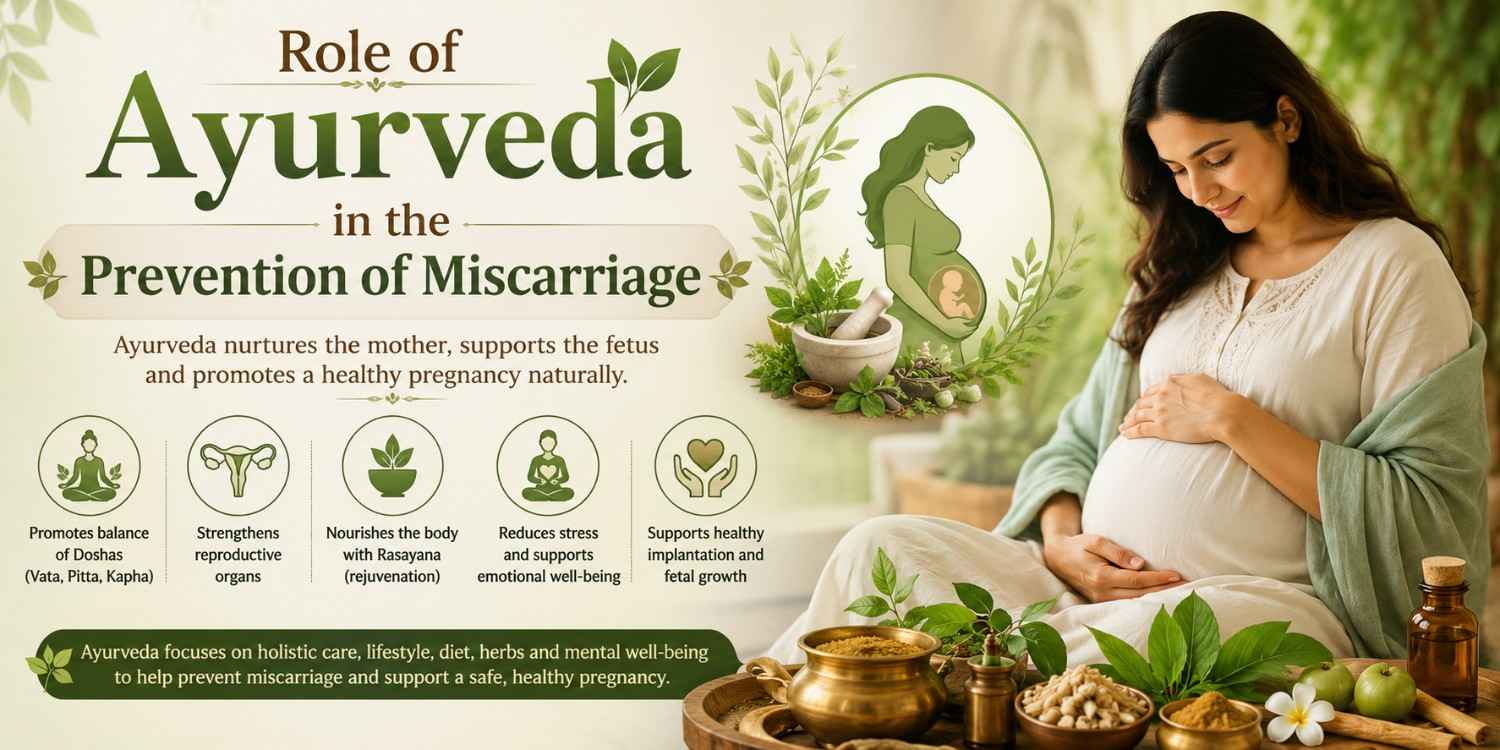
Role of Ayurveda in the Prevention of Miscarriage
May 21, 2026
May 21, 2026
Considered to be one of the most distressing problems in Obstetrics, Miscarriage causes immense emotional and personal trauma to a couple who are planning to go the family way. This problem affects approximately 1% of all women of reproductive age.
Ayurveda has helped thousands of women reclaim their dream of “Motherhood”. Keep reading to know “HOW” …
Acharya Harita has mentioned six types of Vandhyatwa (Infertility). In Ayurveda classics, the expulsion of the foetus up to the fourth month of pregnancy is termed “Garbhasrava” (First Trimester Miscarriage), and in the fifth and sixth months, it is termed as “Garbhapata” (Second Trimester Miscarriage). Thereafter, when the foetus dies within the uterus, it is termed as “Mrita Garbha” or Intrauterine Foetal Death (IUFD).
Since Prevention is always better than cure, in Ayurveda, we get an intricate explanation of Garbhadhana Vidhi (Preconception Care). It starts from the marital age and ends with conception.
Miscarriage, according to Ayurveda, is not seen as a single event but a spectrum of conditions primarily caused by Vata Dosha Aggravation. Other causative factors can be:
Prevention Protocols to stave off Miscarriage, in Ayurveda, are aimed at rectifying the underlying cause. Hence, a single line of management cannot be followed.
Broadly, Ayurveda emphasizes prevention through a Balanced Diet and Reproductive Tissue Strengthening before and during pregnancy. In Ayurveda classics, Chikitsa is advised according to the Dosha and Dhatu involved. It primarily constitutes:
It helps correct the impairment or dysfunction of the Digestive and Metabolic Fires, thereby regulating normal physiological processes, including menstruation and the biological production and maturation of the ovum and sperm.
Significance of Garbhini Paricharya
During 1st trimester
During this trimester, embryogenesis occurs, which demands increased energy. The pregnant woman can encounter issues like Nausea and Vomiting during this phase, often making it difficult to sustain a Balanced Diet, leading to dehydration and nutritional deficiencies. In this phase, consuming a cold, sweet, and liquid diet can effectively prevent dehydration and provide essential nutrients.
During 2nd Trimester
During this period, when the muscular tissue of the foetus is towards significant increase, high protein intake from various plant and animal sources is recommended. Acharya Charaka advised taking milk with Navneeta (fresh, unsalted white butter).
It is revered as a potent and nutrient-dense food-medicine during the fourth month of pregnancy, in Ayurveda. It contains Vitamins such as A, E, D, and K, and minerals like Zinc and Iodine.
During 3rd Trimester
Ghee medicated with Prithakparnayadi Drugs, which are a specialized group of Ayurvedic Herbs, supports Maternal and Foetal Health in the seventh month. They act as a Diuretic and Anabolic Agent, helping alleviate feebleness by balancing Pitta and Kapha.
Herbal and Rasayana Therapies: Certain Stabilizing Herbs (Garbhasthapaka Dravyas) are prescribed in these therapies. This regimen utilizes specific Ayurvedic preparations that counteract factors harmful to the foetus. Herbs, such as Brahmi and Shatavari, are routinely used to prevent spontaneous abortion.
Ayurveda Therapies: Certain Ayurveda Therapies help in reducing the stress factor, which at times, is the primary underlying causative factor of Infertility and Miscarriage.
“Don’t let another pregnancy slip away by embracing Ayurveda. Book a Consultation with Dr. Mayuri Nigam and Dr. Nilesh Nigam at Navyam Ayurveda, Lucknow, to get a time-honoured guided Pregnancy Care Plan!”
Source:- https://navyamarchives.blogspot.com/2026/05/role-of-ayurveda-in-prevention-of.html
May 21, 2026
May 21, 2026
May 11, 2026
May 6, 2026