Fistula Treatment Options in Lucknow
November 17, 2026

November 17, 2026
Recurring swelling, discharge, or pain near the anus can disrupt everyday life. If you have been diagnosed with an anal fistula, understanding your fistula treatment options can help you prepare for a useful consultation.
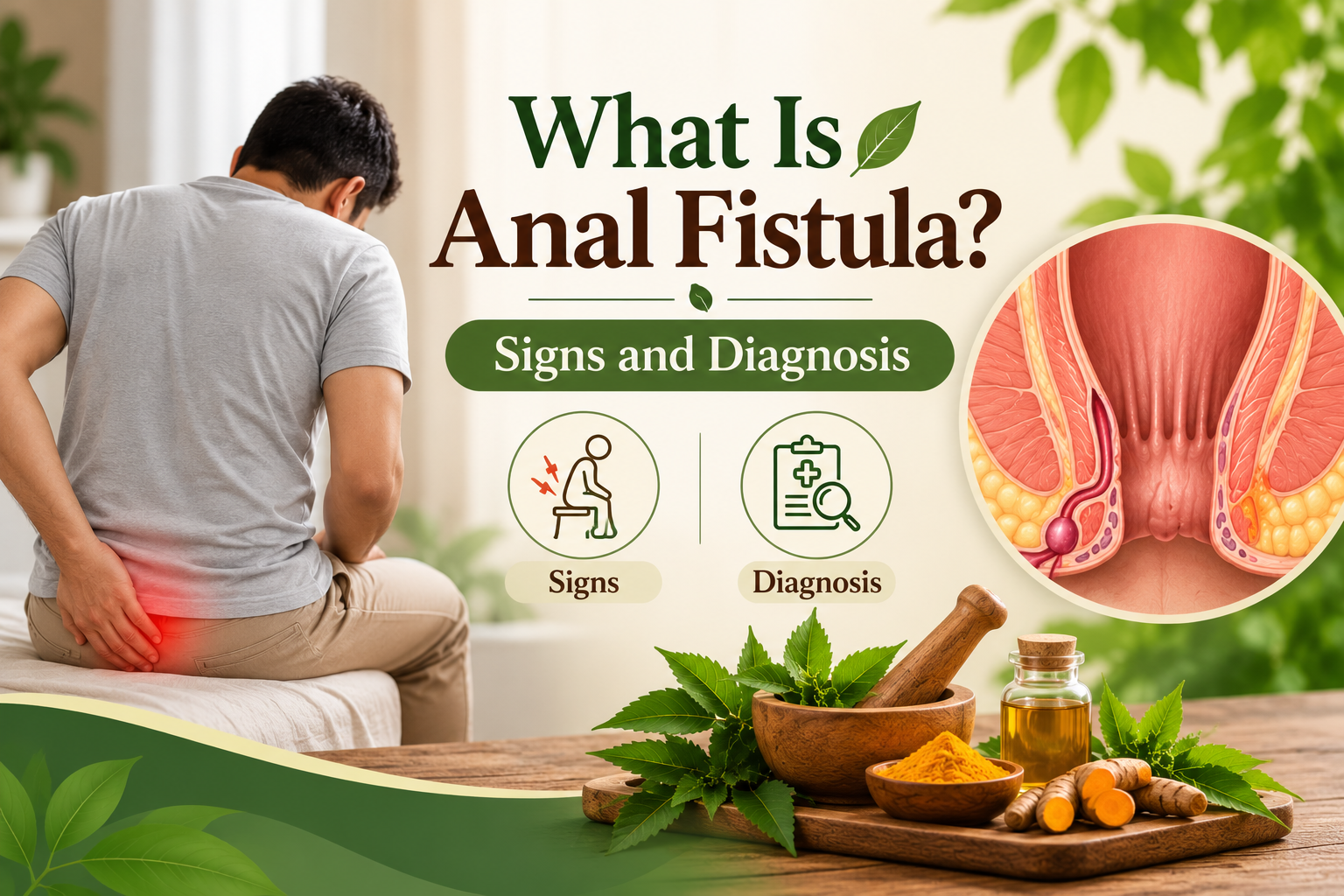
An anal fistula is an abnormal tunnel between the anal canal and the skin near the anus. It often develops after an abscess and usually needs a procedure because it rarely heals on its own.
This guide from Navyam Ayurveda explains common fistula surgery options, what Kshar Sutra for fistula involves, and the questions to ask before choosing treatment in Lucknow.
Two people with similar discharge or swelling may have very different fistula tracts. Treatment planning depends on the tract’s location, branches, associated infection, and relationship to the anal sphincter muscles that control bowel movements.
Assessment usually begins with your medical history and an examination. MRI or specialised ultrasound may be recommended when more information is needed, particularly for deeper or complicated disease.
Bring previous scan reports, prescriptions, and operation notes. Mention any existing problems controlling gas or stool, previous childbirth injuries, and bowel conditions such as Crohn’s disease.
A fistulotomy opens the fistula tract along its length so it can heal from the base. It is commonly considered for suitable low or simple fistulas involving little sphincter muscle.
It may be inappropriate when opening the tract would create an unacceptable risk to bowel control.
A seton is a thread placed through the fistula. A loose seton helps maintain drainage and control infection, often before another procedure. It does not usually cure the fistula by itself.
Ask whether the proposed seton is intended for drainage, staged treatment, or another purpose.
LIFT stands for ligation of the intersphincteric fistula tract. It treats the tract between the sphincter muscles and may be considered when a fistulotomy would risk damaging them.
An advancement flap uses nearby tissue to cover the fistula’s internal opening. It is another option for selected fistulas where avoiding sphincter division is important.
Each approach has different recovery requirements and risks. Ask the surgeon to explain why the recommended procedure fits your anatomy.
Kshar Sutra for fistula uses a medicated thread placed through the fistula tract. Treatment involves procedural placement and follow-up visits for thread changes and assessment. It should not be described as care involving no intervention.
Clinical studies have compared Kshar Sutra with conventional surgery. A multicentre trial published in 1991 reported longer healing times with Kshar Sutra and lower recurrence among the patients followed for one year. A later, small randomised study also reported longer healing with Kshar Sutra, alongside less time away from routine work. These findings do not establish that it is preferable for every fistula type or guarantee an individual outcome.
Before choosing this approach, ask:
Verify recognised qualifications, registration, and relevant experience with the procedure being proposed. Ask who will perform it and where treatment and follow-up will take place.
Request an explanation of the diagnosis, whether infection needs treatment first, and whether care is likely to involve one procedure or several stages.
If an abscess is present, drainage may be needed before definitive fistula treatment.
An estimate should explain consultation fees, investigations, anaesthesia, procedures, dressings, medicines, and follow-up charges. For thread-based treatment, clarify whether repeat changes are included.
Ask about healing, recurrence, and bowel-control risks in your circumstances. Be cautious about guarantees such as “zero recurrence” or “completely risk-free treatment.”
Antibiotics may help associated infection in selected circumstances, but they generally do not eliminate the fistula tract. Repeatedly treating swelling or discharge without reassessing the underlying connection can leave the problem unresolved.
If Crohn’s disease is involved, treatment may require coordinated medical and surgical care. Tell the clinician about ongoing diarrhoea, abdominal symptoms, or a previous inflammatory bowel disease diagnosis.
Recovery differs according to the procedure, wound, and complexity of the fistula. Ask for written instructions covering hygiene, bowel movements, dressings, activity, and medicines.
Keep scheduled reviews even if discomfort improves. Reduced discharge alone does not confirm that the tract has healed.
Seek urgent assessment for increasing pain, fever, chills, spreading redness or swelling, or heavy bleeding.
Choosing among fistula treatment options starts with a confirmed diagnosis and an explanation of the proposed procedure. Comparing surgery and Kshar Sutra for fistula should include suitability, risks, healing time, and follow-up needs.
The choice depends on the tract, sphincter involvement, infection, previous treatment, and bowel-control risks. There is no single procedure suitable for everyone.
It is a medicated-thread procedure requiring placement and repeat follow-up. Ask the practitioner to explain the intervention rather than relying on a “without surgery” label.
No. Examination is the starting point. Imaging is selected when needed to clarify the tract or investigate deeper infection.
Duration varies with the tract and healing progress. Published studies have reported longer healing than fistulotomy, so request an individual estimate and follow-up schedule.
Yes. Recurrence is possible after treatment. Returning swelling, pain, or discharge needs reassessment.