
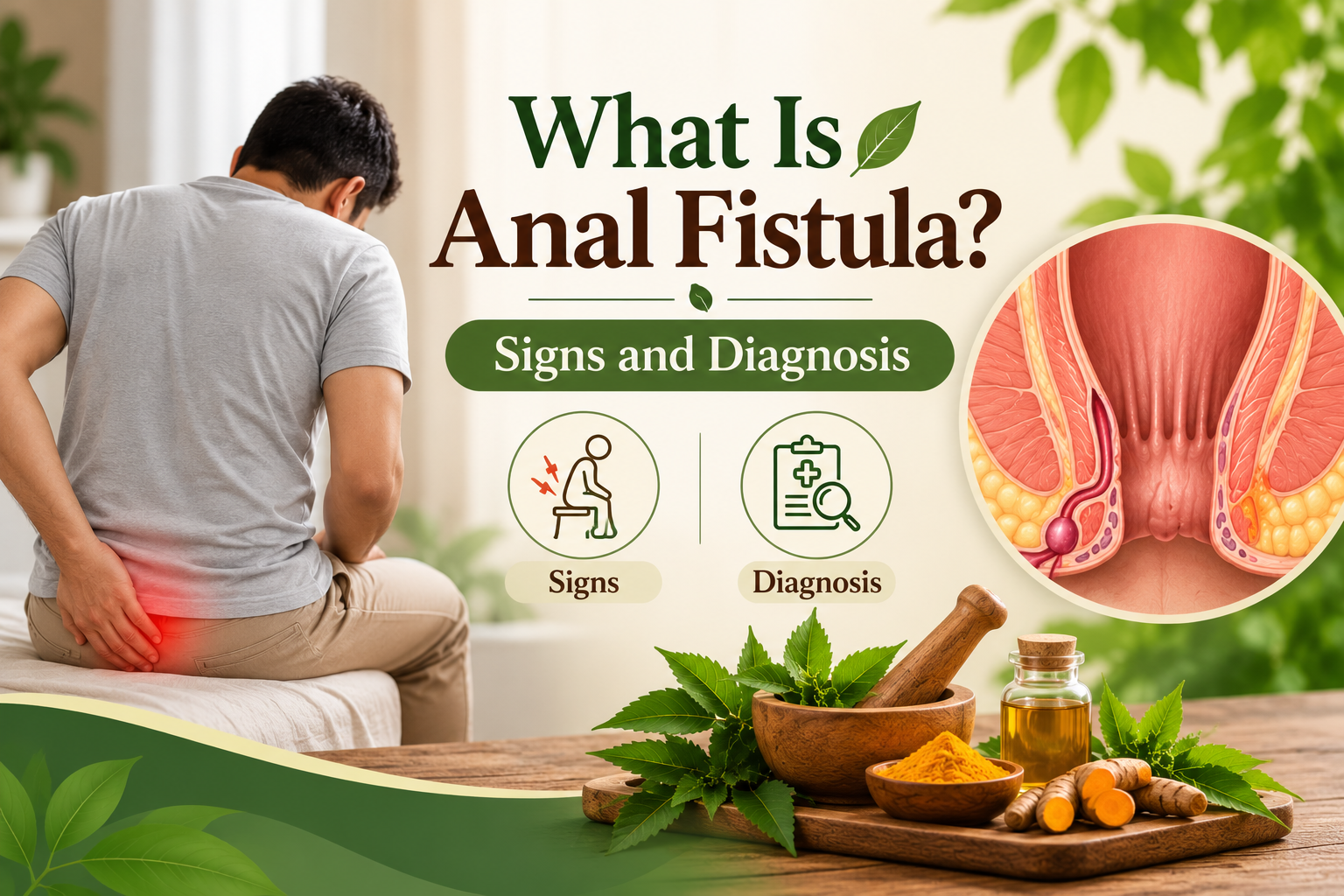
What Is Anal Fistula? Signs and Diagnosis
October 30, 2026
October 30, 2026
A painful swelling near the anus that repeatedly drains and returns can be confusing. You may notice temporary relief after discharge, only for discomfort to develop again. These changes can be associated with an anal fistula and deserve medical assessment.
Recognising anal fistula symptoms can help you seek care earlier, but an examination is needed to confirm the cause. An anal fistula is an abnormal tunnel connecting the anal canal to the skin near the anus. It commonly develops following an infection and abscess.
This guide from Navyam Ayurveda explains common fistula in ano symptoms, warning signs, and what to expect during fistula diagnosis.
Small glands inside the anus can become infected. When pus collects in the surrounding tissue, it forms an abscess. After the abscess drains, a channel may remain between the infected area and the skin.
An abscess and a fistula are related but different problems. The abscess is a collection of pus; the fistula is the persistent connection. Not everyone who has an abscess develops a fistula.
You may notice pus, unpleasant-smelling fluid, or blood-stained discharge from a small opening near the anus. The surrounding skin can become irritated.
Pain may be throbbing and worsen when sitting, moving, coughing, or passing stool. Symptoms vary, and a draining fistula may cause less discomfort between episodes.
Some people experience repeated swelling followed by drainage and temporary improvement. This pattern needs assessment, particularly after a previous anal abscess.
Do not squeeze the swelling or insert anything into a visible opening. Describe the changes to a clinician instead.
A reduction in pain or discharge does not necessarily mean the underlying channel has healed.
If the external opening closes while the fistula remains, another abscess may develop. This can lead to cycles of swelling, pain, drainage, and apparent recovery.
Keep a record of when episodes occur, where swelling develops, and whether discharge follows. This history can help the clinician understand the pattern.
Arrange a consultation for persistent discharge, a recurring painful lump, or symptoms that continue after an abscess has been treated.
Seek urgent medical attention for:
These signs may indicate an abscess or another complication requiring prompt treatment.
The clinician will ask about previous abscesses, drainage procedures, bowel symptoms, and earlier treatment. Mention conditions such as Crohn’s disease, diabetes, or reduced immunity.
Bring previous operation notes, scan reports, and prescriptions when available. Explain any existing difficulty controlling gas or stool, because bowel control matters when planning treatment.
Assessment usually includes inspection of the skin around the anus. A gentle rectal examination or proctoscopy may also be recommended to examine the anal canal.
The clinician should explain the examination and obtain your consent. Tell them if pain makes the assessment difficult.
Many fistulas are identified through clinical assessment. Imaging is selected when more information is needed—for example, to understand a deeper infection or map the fistula’s course.
MRI or specialised ultrasound can help show the tract and its relationship to surrounding structures. Not every patient needs every investigation.
Treatment planning depends on the fistula’s course, branching, associated infection, and relationship to the muscles that control bowel movements.
A straightforward fistula may need a different approach from one involving more muscle. The aim is to treat the abnormal connection while protecting bowel control.
Useful questions to ask include:
Most anal fistulas do not heal by themselves and need a procedure. Antibiotics may be prescribed for associated infection in selected circumstances, but they usually do not eliminate the fistula tract.
If you are considering Ayurvedic treatment or Kshar Sutra, ask about suitability, supporting evidence, procedural risks, and alternatives. Assessment should come before choosing a treatment.
Persistent or recurring anal fistula symptoms deserve attention, even when discharge temporarily reduces the pain.
1. What are the early signs of an anal fistula?
Possible signs include recurring swelling, discomfort, irritation, and discharge from an opening near the anus, particularly after an abscess.
2. Can an anal fistula cause symptoms without severe pain?
Yes. Symptoms can fluctuate, and drainage may temporarily reduce discomfort. Persistent discharge still needs assessment.
3. Is an MRI always needed for fistula diagnosis?
No. Clinical examination is often the starting point. Imaging is used when needed to clarify the tract or investigate deeper infection.
4. Does discharge stopping mean the fistula has healed?
Not necessarily. The skin opening may close while the tract remains, allowing another abscess to form. Seek review if swelling or pain returns.
5. When are fistula symptoms urgent?
Increasing pain, fever, chills, spreading redness or swelling, and heavy bleeding require urgent medical attention.